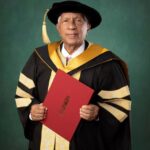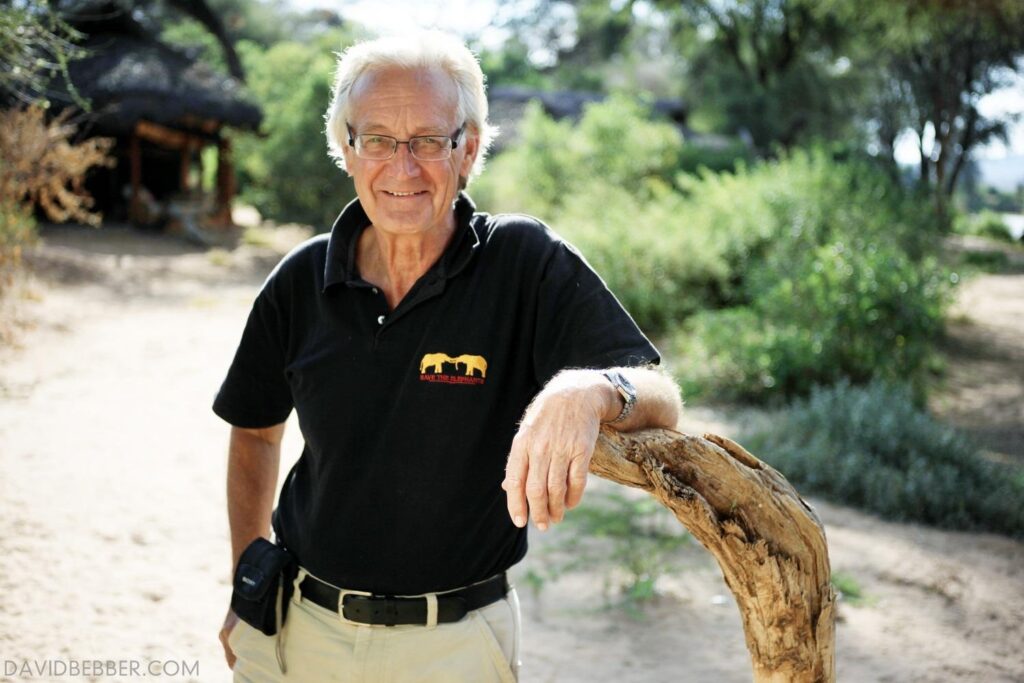

Iain Douglas-Hamilton, zoologist and animal conservationist. Born: 16 August 1942 in Wiltshire. Died: 8 December 2025 in Nairobi, Kenya, aged 83
In 1965, Iain Douglas-Hamilton took off from Nairobi in his little Piper Pacer bound for Lake Manyara National Park in northern Tanzania. With its high wings and its third wheel under the tail rather than the nose – ideal for landing on rough bush strips – the aircraft was perfect for Douglas-Hamilton’s new project: the study of 450 elephants crammed into a verdant strip of land far too small to sustain such numbers.
It was a time when animal behaviourists were moving out of the laboratory and into the field, some of them working under the sharp eye of Niko Tinbergen, a Dutch biologist at Oxford University who later won the Nobel Prize. Jane Goodall was studying chimpanzees and Dian Fossey gorillas.
Tracking elephants, by air and on foot – his park ranger/assistant, Mhoja Burengo, keeping an eye out for marauding rhinos and elephants – took skill and boldness. But Douglas-Hamilton came from a long line of risk-takers. His maternal grandfather was one of the first men to volunteer for the British Expeditionary Force and was killed at the start of the First World War; his father, a Spitfire pilot and squadron leader of Edinburgh’s 603 Squadron, died when his aircraft was hit by enemy fire in 1944. His uncle, the future Duke of Hamilton, was the first person to fly over Mount Everest and photograph its now easily recognisable summit.
Iain Douglas-Hamilton at his research camp in Manyara (Picture: David Debber)
Douglas-Hamilton’s passion for Africa was ignited when his widowed mother, Prunella Stack, remarried in 1950 and moved to Cape Town. The family returned to Britain when Douglas-Hamilton and his brother started secondary school at Gordonstoun. Both boys went on to Oxford, Diarmaid to read physics and Iain to study zoology.
In Manyara, Douglas-Hamilton quickly learned to recognise individual elephants by the shape of their ears and the size of their tusks. This was key to understanding their society, and thus to his DPhil. He began photographing them, storing the images in a little plastic index-card box. He gave every elephant a number, but quickly changed to names when he realised that each animal had its own distinct personality. Most memorable was Boadicea, a ferocious matriarch who charged him often, and an inquisitive teenager, the single-tusked Virgo, who became friendly enough that Douglas-Hamilton was able to introduce her to his baby daughter, Saba.
More than anyone else, Douglas-Hamilton revealed elephants as intelligent sentient beings: how they live in families of multi-generational females led by matriarchs; how they push the adolescent males out of the herd; how the females help and protect each other as they raise their young; how they mourn their dead.
In 1968 Douglas-Hamilton met Oria Rocco, a Kenyan-born photographer. They made a home in Manyara with their two infant daughters, two genet cats, a vulture and a tame mongoose. Among the Elephants, their account of an idyllic bush life, became a bestseller.
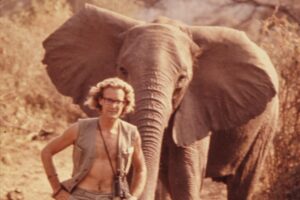 Iain with Virgo the elephant (Picture: Oria Douglas-Hamilton)
By the time the book was published in 1975, though, the big herds were falling victim to ivory poachers with semi-automatic weapons who had begun pouring into Manyara and other protected areas across Africa, killing elephants indiscriminately for their tusks in response to the growing demand for ivory. Douglas-Hamilton began counting elephant populations across the continent, charting their rapid demise. In 1980 he was made honorary chief warden of three national parks in Uganda, introducing air and ground patrols to fight the poachers. By 1989, his figures showed, more than half of Africa’s 1.3 million elephants had been lost in just a decade.
Douglas-Hamilton’s campaign to protect the African elephant moved from the bush to the boardroom – and the corridors of power. He and his fellow conservationists persuaded CITES (the UN Convention on International Trade in Endangered Species) to ban the trade in ivory in 1990, a story that the Douglas-Hamiltons told in their second book, “Battle for the Elephants”. The ban worked for a while, but in 2007, pressured by several southern African countries, CITES permitted a one-off sale of stockpiled ivory to China, where a new and growing middle class had acquired a taste for ivory. This triggered a devastating new wave of continent-wide ivory poaching.
Douglas-Hamilton, who campaigned fiercely against the sale, once again took a public stand. Working closely with Hillary Clinton, then the US secretary of state, he told the Senate foreign relations committee how organised criminal gangs were killing elephants. In partnership with WildAid, he introduced Yao Ming, the seven-and-a-half foot Chinese basketball star, to the wonder of elephants and the horror of the poaching. After a campaign across China with other ambassadors using the slogan “When the buying stops, the killing can too”, Yao presented a petition to the Chinese People’s Consultative Assembly to ban the trade. In 2018, China did just that.
Douglas-Hamilton’s research work continued throughout. In 1993, he launched Save the Elephants. Based in Kenya but working across Africa, the charity fused the talents of local naturalists with world-leading tech and research institutions, creating tools to analyse elephant-tracking data and use it to protect them from poachers, avoid conflict with farmers and create safe “corridors” through the bush.
Other than the five years he spent as a boarder at Gordonstoun, Douglas-Hamilton returned only intermittently to Scotland, mostly to climb the Cuillins or dance at the Skye Balls, based out of the family croft house on the Isle of Raasay. But Scotland never left him. In Kenya he wore his full ceremonial sword, plaid and kilt (with a flamboyant elephant belt buckle) to give away his daughters when they married. And each time he signed his name, it was “Iain”, with that extra “i” that showed how his true identity lay north of the border.
Douglas-Hamilton earned many awards for his work, and in 2015 he was appointed CBE. When he died, Prince William called him “A true hero in elephant conservation. His work changed the world!”
He is survived by his daughters, Saba and Dudu, his six grandchildren – Bundi, Selkie, Luna, Mayian, Cosimo and Luca – and his wife Oria.
Obituaries