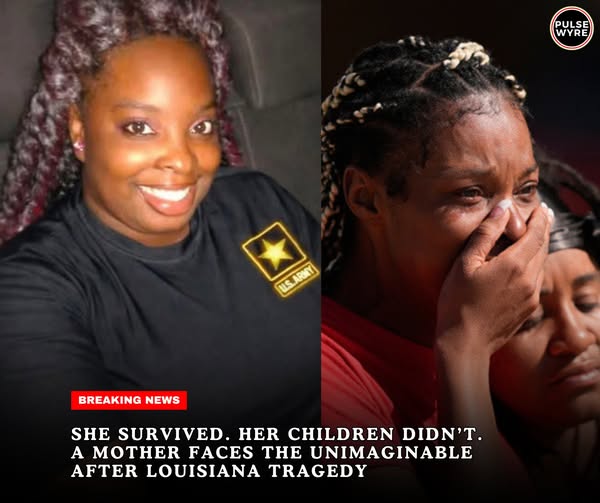

She Lived. Her Children Didn’t: A Mother Confronts Life After an Unthinkable Louisiana Tragedy
In the wake of a devastating act of domestic violence in Louisiana, attention is turning toward the lone survivor—a mother now facing a reality that defies comprehension.
Authorities report that Shamar Elkins carried out a shooting that claimed the lives of seven children. His wife was also shot but survived and is expected to recover physically. What lies ahead for her, however, extends far beyond physical healing.
While headlines capture the scale of the tragedy, they cannot fully convey the depth of what comes next. Surviving such an event is only the beginning. She must now navigate overwhelming grief, trauma, and the profound silence left behind by the loss of her children. Every aspect of her life has been altered in an instant.
This is the part that rarely receives sustained attention—the long, uneven journey of mourning, processing trauma, and attempting to rebuild a sense of purpose after unimaginable loss. Recovery, in cases like this, is not linear. It involves emotional, psychological, and social challenges that can persist for years.
Early reports indicate the suspect may have had prior interactions with law enforcement, along with possible warning signs. These details are likely to raise difficult questions about prevention, intervention, and whether this tragedy could have been avoided.
For now, though, those broader questions sit alongside a more immediate and deeply human reality: a mother survived, but her children did not. The scale of that loss is impossible to quantify.
What does healing look like after something like this? And how can communities better support survivors facing such profound grief?
Join the conversation and share your perspective.